
Fades are some of the most popular men’s haircuts today, and two names come up more than any other: the zero fade and the taper fade. At first glance they look alike, because both have short sides and a clean finish. But they are not the same cut, and the difference changes how you look, how often you visit the barber and how easy the style is to live with. This guide explains what each fade is, how the different heights work, which one suits your face shape and hair type, and how to ask for exactly what you want.
The advice here comes from the kind of conversations that happen in the barber chair every day. At Albakir Barbershop in Oakville, our barbers have more than 15 years of experience cutting fades, and the most common question we hear is simple: “What is the difference between a zero fade and a taper fade?” Let’s answer it step by step.
What is a zero fade?
A zero fade, also called a skin fade or bald fade, starts at bare skin at the bottom and gradually blends into longer hair higher up the sides and back. The shortest part is cut with no guard on the clipper, which is why it is called “zero”. The barber then works upward with different guard lengths and sometimes with scissors or a blade, so there is no visible line where the skin ends and the hair begins. When it is done well, the hair seems to fade out of the skin.
The result is a bold, high-contrast look. Because the bottom of the cut is so short, the difference between the skin and the hair on top stands out. This makes the shape of the cut very sharp and very modern. It also means any regrowth is easy to see, which is why a zero fade needs regular visits.
Best for: men who want a sharp, clean and current look, and who are happy to visit the barber often.
Other names for the zero fade
You may hear the same cut described in a few different ways. “Skin fade”, “bald fade” and “zero fade” all describe a fade that goes down to the skin. If you are not sure which word to use, you can say “a fade down to skin” and your barber will understand.
What is a taper fade?
A taper fade makes the hair gradually shorter around the temples, ears and neckline, but it does not go all the way down to skin. More length is kept at the bottom, so the look is softer and more classic. The taper is often seen as the more traditional of the two. The sides and back stay neat, and the cut keeps a natural outline around the ears and the back of the neck.
Many men choose a taper fade because it looks professional in almost any setting. It works at the office, at a wedding and on a weekend. It is also more forgiving as it grows out. Since there is still hair at the bottom, the cut does not look as untidy after a few weeks.
Best for: men who want a neat, polished look that is easier to keep up.
Taper vs. taper fade
People sometimes mix up a plain taper and a taper fade. A classic taper simply gets shorter toward the neckline and around the ears, often with scissors or a clipper over comb. A taper fade uses clippers and guards to blend the sides more smoothly, so the change in length is more gradual and more visible. Both are clean and tidy. A taper fade has a little more definition. If you want to know which one fits your hair, your barber can show you the difference in the chair.
Zero fade vs. taper fade at a glance
This table sums up the main differences between the two cuts.
| Zero fade | Taper fade | |
|---|---|---|
| Shortest length | Bare skin | Short hair, not skin |
| Look | Bold and sharp | Soft and classic |
| Contrast | High | Low to medium |
| Typical upkeep | Every 2 to 3 weeks | Every 3 to 4 weeks |
| Grow-out | Regrowth shows quickly | Grows out more gently |
| Style statement | Strong and modern | Neat and understated |
| Price at Albakir | $35 | $35 |
Both cuts cost the same at our shop, so the choice should come down to the look you want and the time you are willing to spend on upkeep.
Low, mid or high: how fade height works
Both fades can sit at different heights on the head. The height is the point where the shortest part of the cut starts to blend into longer hair. It is one of the most important choices you make, and it changes the whole feel of the haircut.
- Low fade: starts just above the ears and follows the neckline. It is subtle and safe for most people.
- Mid fade: starts around the middle of the sides of the head. It is a balanced, popular choice.
- High fade: starts near the temples. It gives the strongest contrast and the cleanest, boldest shape.
A drop fade is a variation where the fade line curves down behind the ear, following the shape of your head. It adds some shape and works well with a number of hairstyles.
Low fade
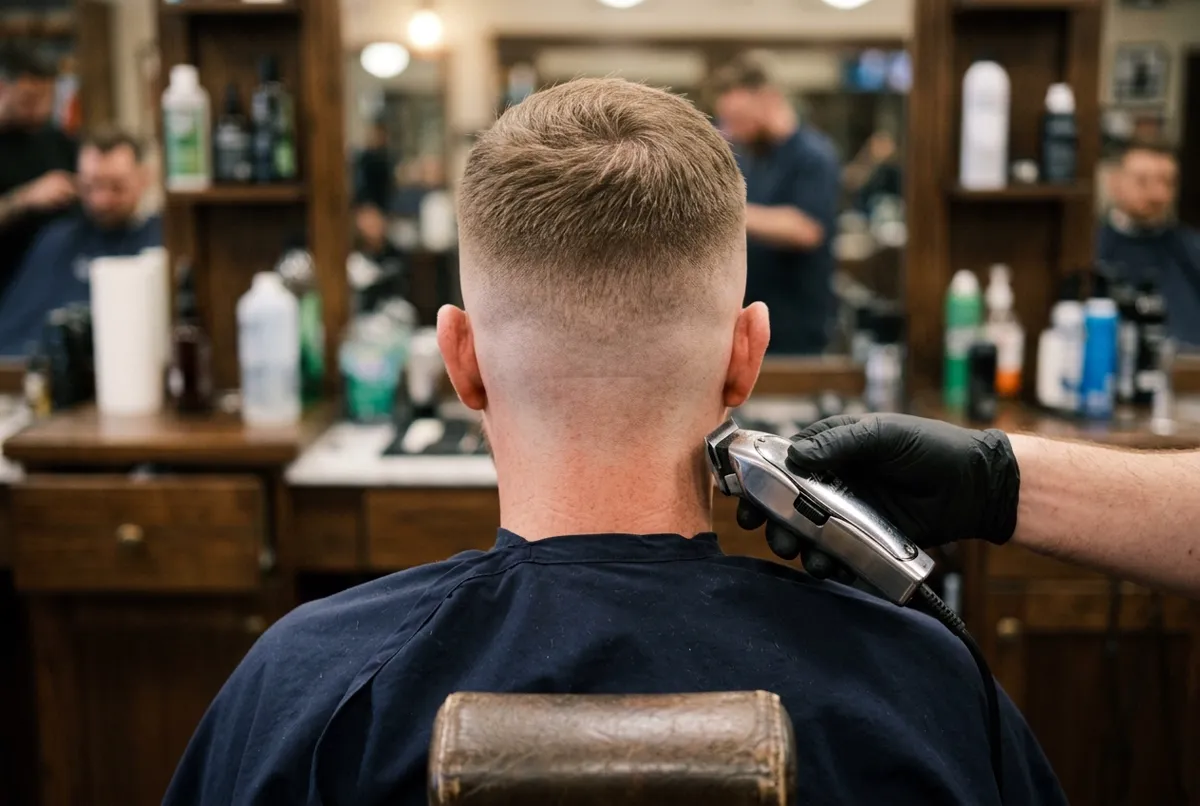
A low fade keeps most of the length on the sides and only shortens the hair close to the ears and the nape. Because it sits low, it is the easiest height to wear. It suits men who want a clean look without a big change. A low zero fade gives a small patch of skin around the ears and neck. A low taper fade gives a soft edge with a little hair remaining. If this is your first fade, a low taper is a comfortable place to start.
Mid fade
A mid fade sits in the middle, so it feels balanced. It shows more of the fade than a low cut but is less dramatic than a high one. Many men choose a mid fade because it works with most hair lengths on top and most face shapes. A mid zero fade looks sharp and modern. A mid taper looks tidy and a little more relaxed.
High fade
A high fade starts near the temples, so a large part of the sides is cut very short. It makes the hair on top stand out and gives the head a clean, strong shape. A high zero fade has the most contrast of any fade. It is a statement cut, and it needs frequent visits because the short area is large and any growth is easy to see. A high taper is a softer way to get a similar shape.
Which fade suits your face shape?
Face shape is a useful starting point. The fade changes how the sides and the top of your head look, and that can make your face look longer, wider or more balanced.
- Oval: suits almost any fade, so you can choose by style and upkeep.
- Round: a mid or high fade with height on top can make the face look longer.
- Square: a low or mid taper keeps the strong jawline balanced.
- Long or narrow: a low fade with a bit of volume on the sides keeps the face from looking longer.
- Heart-shaped: a low or mid fade with some length on top balances a wider forehead and a narrower chin.
These are general guides, not strict rules. Your hairline, the shape of your head, the position of your ears and your beard all matter just as much. Ask your barber for advice, because they can see the whole picture and adjust the height and the length for you.
Fades for different hair types
Hair type changes how a fade looks and how it is cut. The same fade will not look identical on straight, wavy and curly hair, and a good barber adjusts the technique for each one.
Straight hair
Straight hair shows the blend very clearly. Every guard change is visible, so the barber needs a smooth hand. Straight hair can lie flat, so some length and texture on top helps give the style shape. Both the zero fade and the taper fade work well. A taper is often a good choice for fine straight hair because it keeps a little more weight at the bottom.
Wavy hair
Wavy hair has natural movement, which looks good on top of a fade. The shorter sides keep the shape tidy, while the waves give the top some volume and character. A mid fade is a popular option. If your hair is wavy, tell your barber how much of the wave you want to keep, so the length on top suits the cut.
Curly and coily hair
Curly and coily hair pairs very well with fades. The contrast between the tight curls on top and the clean sides makes both shapes stand out. Zero fades are common with curly hair because the crisp skin line sharpens the outline. Because curly hair can look shorter when it is dry than when it is wet, tell your barber how long you want the top to look in the end.
Thick or thin hair
Thick hair is well suited to fades because the cut removes bulk from the sides and keeps the shape under control. Thin or fine hair can also look good, but high-contrast cuts can make thinning areas more noticeable. A low or mid taper can be a softer option. If you have a receding hairline or thinning at the temples, mention it, so your barber can choose a fade height and a front shape that work with it.
How to choose between a zero fade and a taper fade
- Think about upkeep. A zero fade needs more frequent visits to stay sharp. A taper fade can go a little longer between cuts.
- Think about your workplace and style. A taper is a safe, polished choice. A skin fade is a stronger statement.
- Think about your hair on top. Both go with short, medium and longer styles, from textured crops to side parts.
- Think about your beard. If you wear a beard, the fade should blend into it. Both cuts can do this, and your barber can plan the line from the sideburn into the beard.
- Ask your barber. A short chat helps them find the right height and length for your head.
Maintenance: how often should you get a fade?
A fade is a sharp cut, and it is at its best in the first week or two. After that the short hair begins to grow, the blend softens and the neckline loses its edge. How quickly this happens depends on how fast your hair grows and how short the bottom of the cut is.
| Cut | Suggested visit | What you will notice as it grows |
|---|---|---|
| High zero fade | Every 2 to 3 weeks | Skin area fills in fast and the contrast fades |
| Mid zero fade | Every 2 to 3 weeks | The bottom turns fuzzy and the neckline softens |
| Low zero fade | Every 3 weeks | The edge around the ears and nape blurs |
| Taper fade (low, mid or high) | Every 3 to 4 weeks | Sides grow out gently and keep their shape longer |
These times are general guides. Some men like to refresh their cut earlier, and others are happy to let it grow a little. If you only want a quick tidy, ask for a clean-up of the neckline and the sides.
Tips to keep your fade looking good at home
- Wash your hair as usual and keep the scalp clean, because skin on a zero fade is exposed.
- Use a moisturizer on bare skin areas if they feel dry. Our guide to skincare products can help you choose what to use.
- Protect exposed skin from the sun in summer, because skin that is usually covered by hair can burn.
- Do not try to trim the sides yourself. A small mistake in a fade is hard to fix.
- Book your next visit before the cut has grown out, so you stay ahead of it.
How to ask your barber for a fade
Most bad haircuts come from a gap in communication. You do not need to know barber terms. You only need to describe what you want clearly. Here is a simple way to do it.
- Name the fade. Say “zero fade” or “taper fade”. If you are not sure, say “a fade down to skin” or “a fade that does not go to skin”.
- Choose the height. Say low, mid or high. You can also point to where you want the fade to start on your head.
- Say how much to take off the top. Use your fingers to show the length, or say “just a trim” or “a lot shorter”.
- Mention the neckline. Tell the barber if you want it rounded, squared or tapered naturally.
- Bring a photo. A picture is the clearest way to show the cut. Choose one that shows the sides, the back and the top.
- Mention your beard. If you want the fade to blend into your beard, say so at the start.
It is also fine to say that you are not sure. A good barber will ask a few questions about your routine, your hair and your style, and then suggest a cut that fits.
Styling your fade
The fade handles the sides, so the style on top is what makes the cut your own. Here are some options that work well with both a zero fade and a taper fade.
- Textured crop: short, messy-looking texture on top with a clean fade on the sides. It is easy to style and works with many hair types.
- Side part: a neat part with a comb-over and a fade. It looks sharp and professional, and it pairs especially well with a taper.
- Quiff or pompadour: longer hair on top styled up and back. A high or mid fade makes it stand out.
- Slick back: hair combed straight back over a tight fade. It needs some length on top.
- Curls or waves on top: let natural texture show over a clean fade.
- Buzz on top: a short, even length on top gives a very low-maintenance fade.
For styling at home, start with a towel-dried head. Use a small amount of product, work it through with your fingers or a comb and shape it as it dries. A light matte clay or paste gives texture, while a pomade gives shine and hold for slicked styles. A little goes a long way, and you can always add more.
Fades and beards
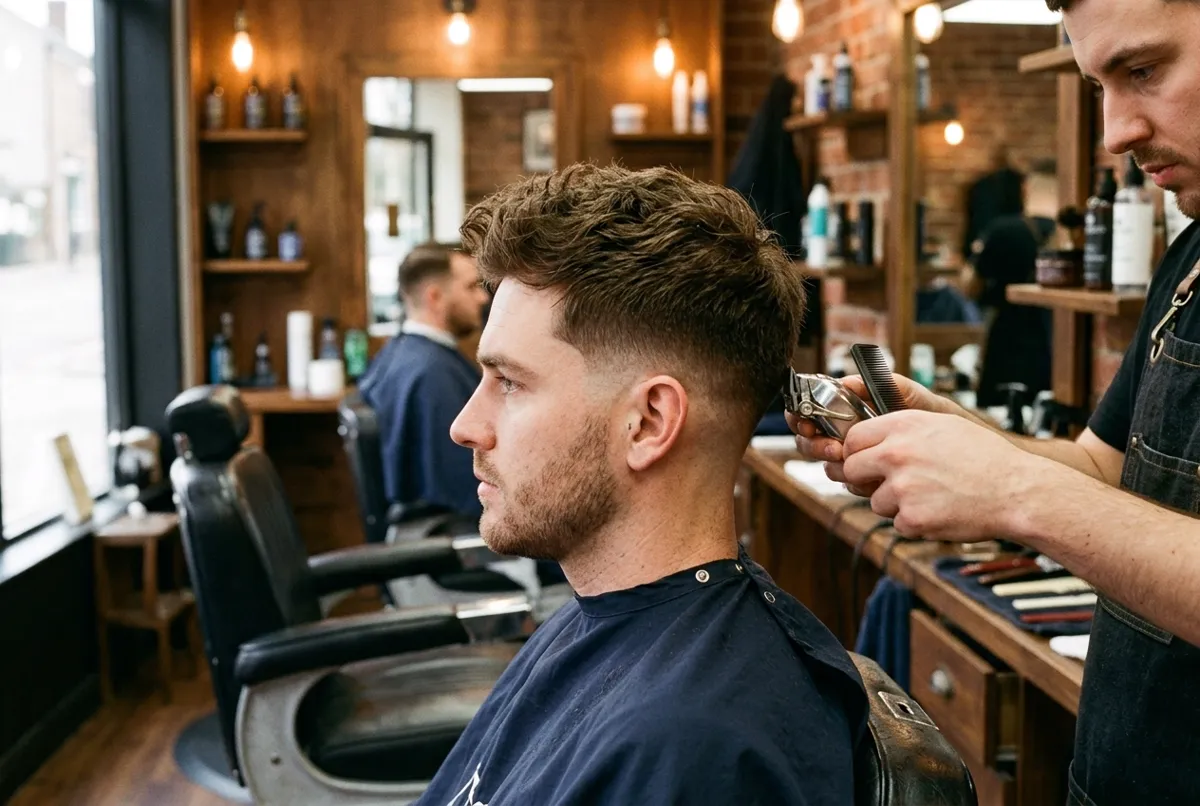
A fade is a natural match for a beard. The hair on the sides of your head blends into the sideburns, and the sideburns blend into the beard. This is sometimes called a beard fade. With a zero fade, the skin area can continue into the cheek, with the beard growing out of it. With a taper fade, the transition is softer, and the beard flows more gently from the hair.
If you wear a beard, keep it as tidy as the haircut. A clean cheek line and a sharp neckline make both look better. Read our guide to beard maintenance for tips on care between visits. If you want a smooth finish, a straight razor shave is a classic way to complete the look.
Common fade mistakes to avoid
- Choosing a fade that is too high for your head shape. A high fade shows every bump and curve. Ask your barber to check your head shape first.
- Ignoring upkeep. If you cannot visit every few weeks, a taper is often a better fit than a zero fade.
- Skipping the conversation. A short chat prevents most mistakes.
- Using too much product. Heavy product makes the top look flat and takes attention from the fade.
- Not mentioning the hairline. Cowlicks, a receding hairline or a widow’s peak all change how a fade should be cut.
Fades at Albakir Barbershop
At Albakir Barbershop we cut fades every day, and we take the time to match the cut to your head, your hair and your routine. Here are the two services this guide covers.
- Zero Fade ($35): a seamless bald skin fade blended with shear texturing on top.
- Taper Fade ($35): a modern low, mid or high taper that keeps the bulk and flow on the crown.
If you want something different, a classic haircut is also $35. Want a fade with a beard? Add a beard trim and lineup, or book a haircut and beard trim combo. Curious about the tools behind a great cut? Read our guide to scissor cuts vs. clipper cuts.
If you would like a more complete experience, take a look at our VIP services and our VIP package. You can also learn more about us and our team.
Frequently asked questions
What is the main difference between a zero fade and a taper fade?
A zero fade goes down to bare skin and has a bold, high-contrast look. A taper fade keeps short hair at the bottom, so it looks softer and more classic. Both blend into longer hair on top.
Which fade is easier to maintain?
A taper fade is usually easier to maintain. Because it does not go to skin, it grows out more gently and can go about 3 to 4 weeks between cuts. A zero fade looks best when refreshed every 2 to 3 weeks.
Can I get a zero fade or a taper fade at a low, mid or high height?
Yes. Both cuts can be done low, mid or high. The height is a separate choice from the type of fade. Your barber can help you choose the height that suits your head shape and style.
Is a zero fade suitable for work?
In many workplaces, yes. A zero fade with a neat style on top can look clean and sharp. If your workplace is very traditional, or you want a more understated look, a low taper fade is a safe option.
Do fades work with curly hair?
Yes. Fades and curly hair go together well. The clean sides make the curls on top stand out. Tell your barber how long you want the curls to be, because curly hair can look shorter once it dries.
How much does a fade cost at Albakir Barbershop?
A Zero Fade is $35 and a Taper Fade is $35. A regular Haircut is also $35. You can see all prices on our services page.
Do I need an appointment, or can I walk in?
Walk-ins are welcome. If you want to choose a time, you can book online or call (905) 844-0555.
What should I bring to my appointment?
A photo of the cut you want is the most helpful thing. Photos from the front, side and back are best. If you do not have one, a short chat with your barber is enough.
What are your opening hours?
We are open Monday to Friday from 10 am to 8 pm, Saturday from 10 am to 6 pm and Sunday from 10 am to 5 pm. For more details, visit our contact page.
Book your fade in Oakville
Whether you choose a bold zero fade or a classic taper fade, the best way to get a cut you like is to talk to your barber. Visit us at 560 Kerr St, Oakville, ON L6K 3C7, book online, or call (905) 844-0555. We are open Monday to Friday 10 to 8, Saturday 10 to 6 and Sunday 10 to 5, and walk-ins are welcome. See all barber services and prices, or contact us with any questions.
3 Responses