
The straight razor shave is one of the oldest and most loved barbershop traditions. A skilled barber, warm towels, rich lather and a sharp blade can give you a result that a regular razor often cannot match. For many men, the other reason to ask about it is razor bumps. If your face or neck gets red, sore or bumpy after shaving, you want to know whether a different method can help. This guide explains what a straight razor shave is, why razor bumps happen, how a professional shave is done, and what you can do before and after to look after your skin.
What is a straight razor shave?
A straight razor shave uses a single, very sharp blade held by the barber. Unlike a cartridge razor with several blades, it cuts the hair cleanly at the skin surface in controlled passes. It is done with the skin well prepared, which is what makes it so smooth and comfortable.
The barber holds the blade at a shallow angle and uses the other hand to stretch the skin flat. This lets the edge glide over the surface instead of dragging across it. The barber also watches the direction of hair growth, which changes across the face and neck, and adjusts each stroke to match. That level of control is hard to copy with a cartridge razor at home, where you are shaving by feel in a mirror.
A professional shave is also slower than a quick shave at home. That is part of the point. The time spent on preparation, lather and careful passes is what makes the difference in how your skin feels afterwards.
Why a straight razor can feel better
- A very close, clean finish. A single sharp blade cuts the hair at the surface in one clean stroke.
- Less irritation for many men. Multi-blade razors can tug and pull at the hair, and some men find they get razor bumps from this. A well-prepared straight razor shave with proper technique can be gentler on the skin.
- Preparation that makes a difference. Hot towels and pre-shave oil soften the hair and open the skin before the blade touches it.
- A relaxing experience. The warm towels, aromas and steady pace make it a break from your day.
Results vary from person to person, and skin that is very sensitive may still react. Tell your barber about any concerns before you start.
What causes razor bumps?
Razor bumps happen when a shaved hair curls back and grows into the skin. They are more common with tightly curled hair, with shaving against the grain, and with shaving too close or with a dull blade. Good preparation, a sharp blade and the right direction of shaving all help reduce them.
The medical name for this problem is often given as pseudofolliculitis barbae, but you do not need to remember that. What matters is understanding how it starts so you can take sensible steps to reduce it.
How a hair turns into a bump
Every hair grows out of a small opening in the skin called a follicle. When you shave, the hair is cut at or just below the skin line. The cut end can be sharp. If the hair is curly, it may bend as it grows and point back toward the skin. Sometimes it pushes into the skin beside the follicle instead of coming out of the opening. This is sometimes called an ingrown hair.
Your body treats the hair like a small foreign object. The area becomes red, raised and sometimes tender. In some cases a small pimple-like head appears. Picking or squeezing these bumps can make them worse and may lead to marks or infection.
Common triggers
- Curly or coarse hair. Tightly curled hair has more chance of bending back into the skin after it is cut.
- Shaving against the grain. Going against the direction of growth cuts the hair lower and can make it easier for the tip to get trapped.
- Pulling the skin tight. Stretching the skin while shaving lets the hair be cut below the surface. When the skin relaxes, the hair tip can sit under it.
- A dull blade. A blade that is not sharp drags and tugs at the hair and skin. This causes more irritation.
- Going over the same area many times. Repeated passes in the same spot can scrape the skin.
- Dry shaving or poor preparation. Hair that is hard and skin that is dry are more likely to be irritated.
- Tight collars and rubbing. Friction on the neck after a shave can add to the problem.
Straight razor shave vs razor bumps: what to expect
Many men ask if switching to a straight razor shave will stop razor bumps. The honest answer is that it can help, but it is not a cure and it cannot promise you will have no irritation. A shave with a straight razor gives the barber more control over the angle, pressure and direction. Good preparation softens the hair first. Both of these can lower the chance of irritation for some men.
Some men with very curly hair or sensitive skin still get bumps, even with a careful shave. For them, the best approach may be to shave less often, to leave a little length, or to keep a short beard. A barber can talk through these options with you.
Why a professional shave can be gentler
There are a few reasons a barber shave may be easier on the skin than a quick shave at home:
- The hair is softened with heat and moisture before any cutting starts.
- The blade is fresh and sharp for each client.
- The barber follows the direction of hair growth, which changes on the cheeks, chin and neck.
- The barber uses light pressure and does not press hard into the skin.
- The skin is cooled and moisturized at the end.
Straight razor and cartridge razor compared
| Point | Straight razor shave at a barbershop | Cartridge razor at home |
|---|---|---|
| Blade | One sharp blade, fresh for each client | Several blades in one head, which can become dull with use |
| Preparation | Hot towel, pre-shave oil and warm lather | Depends on your routine; often a quick rinse and foam |
| Control | Barber adjusts angle and direction as the hair changes | You work by feel, often in a mirror |
| Pressure | Light, steady strokes | Easy to press too hard |
| Time | Slower and more careful | Fast and convenient |
| Skin finish | Cooling splash and aftershave balm | Depends on what you apply afterwards |
| Razor bumps | Can help reduce the chance for many men | Some men find tugging leads to bumps |
Neither method is right for everyone. A cartridge razor is fine for many men when used with care. The table simply shows why a professional shave can be a good option if you often struggle with irritation.
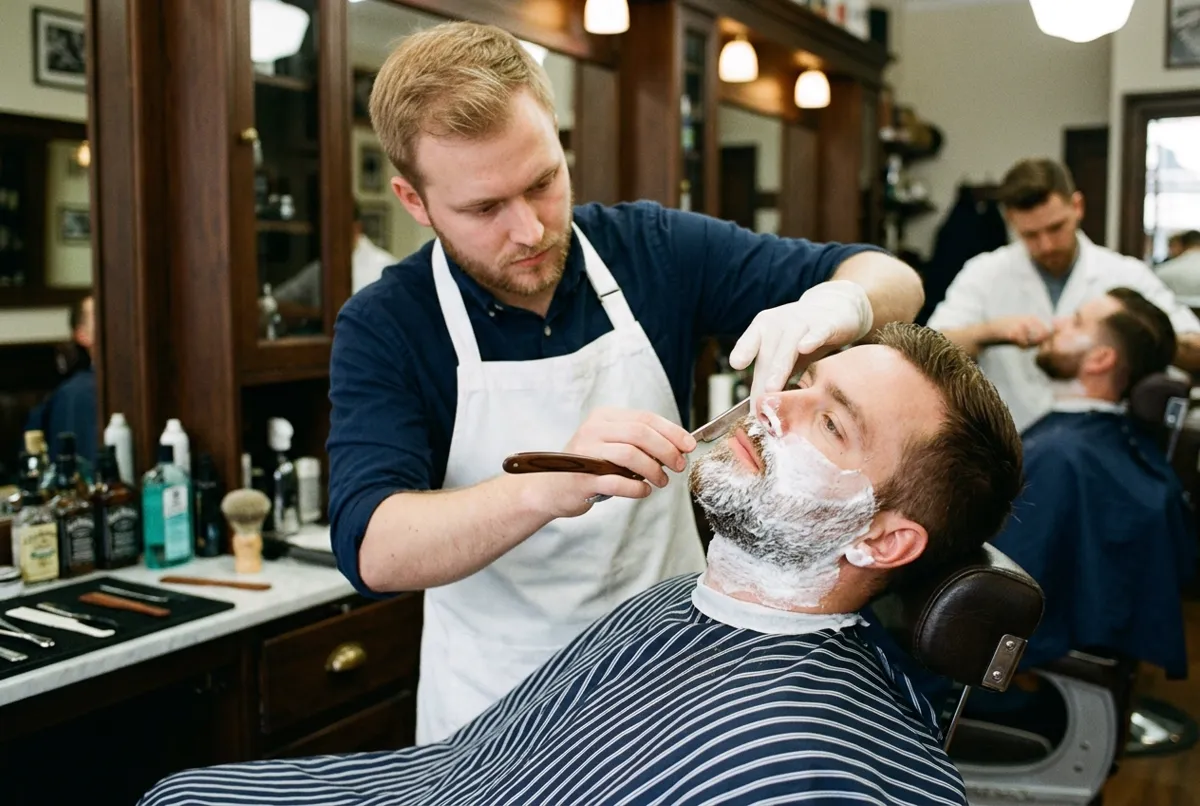
How a hot towel shave goes, step by step
- Pre-shave oil and hot towel. A warm towel softens the beard and opens the skin.
- Thick, warm lather. The barber works it into the hair with a brush to lift it from the skin.
- Straight razor passes. The barber shaves with careful, steady strokes, usually with the grain first.
- Touch-ups. Any areas that need it are refined.
- Cooling finish. A cool towel or splash and aftershave balm calm the skin.
Why the grain matters
Hair on your face does not all grow the same way. On the cheeks it often grows downward, on the neck it may grow upward or sideways, and some men have swirls near the chin or jawline. Shaving with the grain means moving the blade the same way the hair grows. This is gentler and leaves the hair a little longer than a pass against the grain, which lowers the chance of it turning back into the skin.
Some men ask for a second pass across or against the grain for a closer finish. If you get razor bumps, it is worth telling your barber. A single pass with the grain may suit your skin better, even if the result is slightly less close.
What to tell your barber before you start
- If you often get razor bumps and where they appear.
- If your skin is dry, oily or easily irritated.
- If you have any cuts, spots, rashes or sunburn on the area.
- If you are using any skin treatments that make your skin more sensitive.
- How close you like your shave to be.
A barber cannot diagnose a skin condition, but they can adjust the way they shave so the experience is as comfortable as possible.
Before your shave: simple preparation
You do not need to do much before you arrive. A few simple habits help.
- Arrive with clean skin. If you can, wash your face earlier in the day. Avoid scrubbing hard right before the shave.
- Let the hair grow a little. If you have been shaving every day and have a lot of irritation, a few days of growth gives the barber something to work with.
- Skip harsh products. Avoid strong exfoliating products or anything that stings on the day of your shave.
- Tell us about any skin problems. If an area is sore or infected, it is better to wait until it has settled.
Aftercare tips
- Do not touch your face with unwashed hands for the first few hours.
- Skip heavily scented or alcohol-heavy products on freshly shaved skin.
- Use a light moisturizer, and sunscreen when you go out.
- If you shave at home, replace blades regularly and shave with the grain.
For more on keeping your skin healthy, read about the skincare products every man needs.
A simple routine between visits
- Wash gently. Use lukewarm water and a mild cleanser. Pat the skin dry instead of rubbing.
- Moisturize. Dry skin can feel tight and itchy. A light, non-greasy moisturizer helps keep it comfortable.
- Do not pick or squeeze bumps. This can push the hair deeper and cause marks or infection.
- Avoid tight collars. Rubbing on a freshly shaved neck can trigger irritation.
- Be gentle with exfoliation. Some men use a soft cloth or a mild product once or twice a week to help free trapped hairs. If your skin stings or turns red, stop and let it rest.
Shaving at home: ways to lower the risk of bumps
You will not always shave at the barbershop. If you shave at home between visits, these habits can help.
- Soften the hair first. Shave after a warm shower or hold a warm, damp towel on your face for a minute or two.
- Use a good lather or gel. It gives the blade something to glide on and protects the skin.
- Use a sharp blade. Change it often. A dull blade drags and irritates.
- Shave with the grain. It is a little less close, but usually kinder to the skin.
- Do not stretch the skin tight. Let it stay natural.
- Use light pressure. Let the blade do the work. Do not press down.
- Rinse with cool water. This helps calm the skin after shaving.
Different approaches by hair type
| Hair or skin type | Common issue | Approach that may help |
|---|---|---|
| Tightly curled hair | Hairs bend back into the skin after cutting | Shave with the grain, avoid very close passes, consider leaving a little length |
| Coarse, thick hair | Hair is hard to cut cleanly and tugs | Longer preparation with a hot towel and a sharp blade |
| Sensitive skin | Redness and stinging after shaving | Light pressure, fewer passes, gentle aftercare |
| Dry skin | Tightness and flaking | Moisturize daily and avoid alcohol-heavy products |
| Frequent daily shavers | Skin has little time to recover | Shave less often if your routine allows |
These are general ideas, not medical advice. Every person is different, and what works for one man may not suit another.
Options if you do not want to shave every day
If razor bumps keep coming back, one choice is to shave less often. A short, neat beard or stubble that is kept tidy with a trim can remove the need to shave close every day. Hair that is cut short but not to the skin is less likely to curl back in.
A clean outline can keep the look sharp. The Beard Lineup Razor service defines the cheek and neck lines while leaving the rest of the beard at the length you choose. If you want to keep some length, you can also book a beard trim and lineup with your haircut.
If you are growing or keeping a beard, our guide to maintaining and softening your beard has simple tips for daily care.
When to see a doctor
A barber can shave carefully and give you practical advice, but we are not doctors. Razor bumps that do not improve, keep coming back, or get worse need a medical opinion. See a doctor or dermatologist if you notice:
- Bumps that are painful, swollen or full of pus.
- Skin that is hot, very red or spreading in redness.
- Scarring, dark marks or thickened skin in the shaved area.
- A rash that does not settle after a few days.
- Any spot that bleeds easily, changes shape or does not heal.
A doctor can tell you whether the problem is simple ingrown hairs or something else, and can suggest treatment that is right for you. A shave can be part of a good routine, but it is not a replacement for medical care.
Straight razor services at Albakir Barbershop
At Albakir Barbershop, our barbers have more than 15 years of experience with classic shaves, fades and beard work. You can learn more about our team on our about us page.
- Hot Towel Shave ($30): an old-school shave with aromatic eucalyptus lather, straight blade passes and a cooling splash.
- Head Shave ($30): a smooth scalp shave with hot pre-shave oil, warm lather and aftershave balm.
- Beard Lineup Razor ($20): a razor-sharp cheek and neck outline.
Looking after a beard rather than shaving it? Read how to maintain and soften your beard, or see all our services and prices.
More ways to look your best
A shave pairs well with other services. If you want a full grooming session, take a look at our VIP services or the VIP package. If you are choosing a haircut style at the same visit, our guides on zero fade vs taper fade and scissor cuts vs clipper can help you decide.
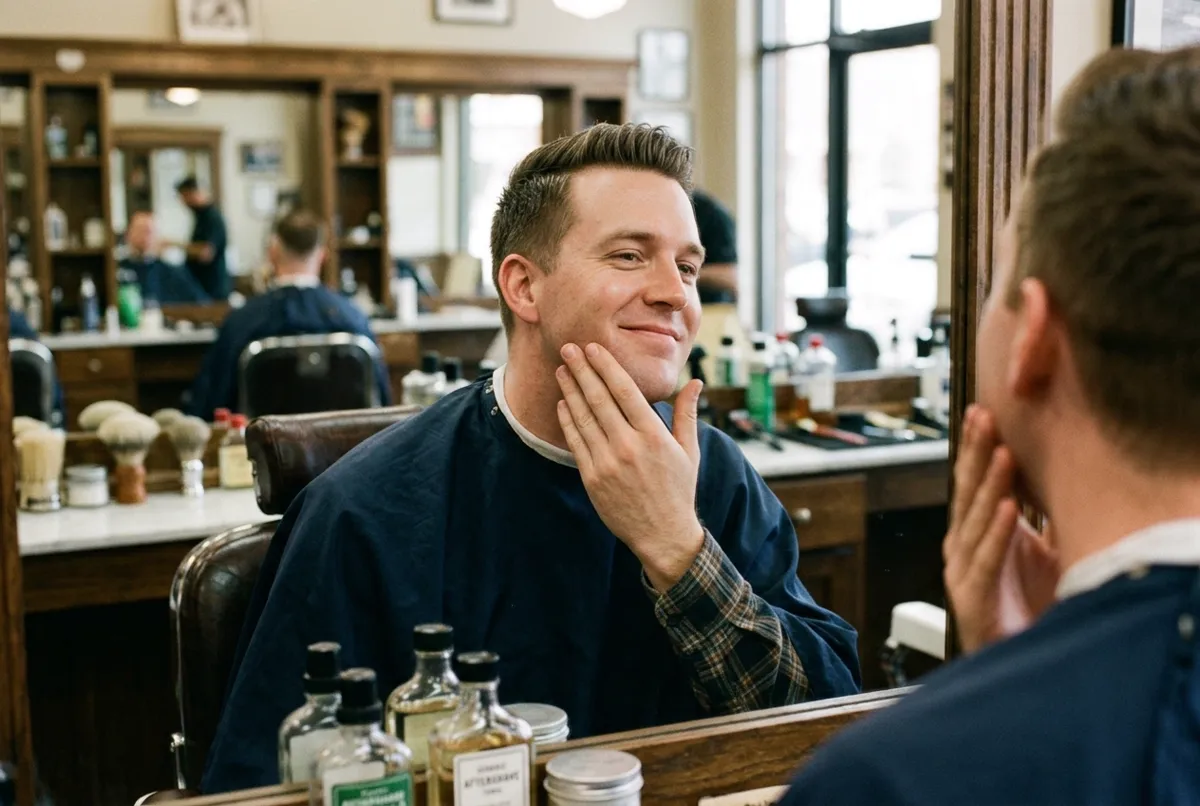
Visit us in Oakville
Albakir Barbershop is at 560 Kerr St, Oakville ON L6K 3C7. Walk-ins are welcome, and you can also book ahead.
| Day | Hours |
|---|---|
| Monday to Friday | 10 am to 8 pm |
| Saturday | 10 am to 6 pm |
| Sunday | 10 am to 5 pm |
If you have questions about whether a straight razor shave suits your skin, you can ask us in the shop or through our contact us page.
Frequently asked questions
Will a straight razor shave stop razor bumps?
It cannot promise that. For many men, a well-prepared shave with a sharp blade and the right direction of strokes can help reduce irritation. Some men with very curly hair or sensitive skin may still get bumps. If the problem is persistent, speak to a doctor.
Is a straight razor shave safe?
When it is done by a trained barber with a clean, fresh blade, it is a routine barbershop service. Stay still, tell your barber about any skin problems, and follow the aftercare advice. If you have an active rash, infection or open sore in the area, wait until it has healed.
How often should I get a hot towel shave?
It depends on how fast your hair grows and how your skin reacts. Many men book one every one to two weeks, and some do so for special occasions. If your skin gets irritated easily, ask your barber how often is right for you.
Can I get a straight razor shave if I have sensitive skin?
Often yes, but tell your barber first. They can use lighter pressure, fewer passes and a shave with the grain. Skin that is very sensitive may still react, and in that case it is a good idea to check with a doctor.
What should I do if I get bumps after a shave?
Leave them alone. Do not pick or squeeze them. Wash gently, moisturize with a light product and avoid shaving the area until it settles. If the bumps are painful, spread, or do not go away, see a doctor.
Does shaving with the grain really matter?
Yes, it is one of the simplest ways to lower the chance of irritation. Shaving against the grain gives a closer result, but it also raises the chance that hairs will turn back into the skin. Your barber can follow the grain on each part of your face.
Do you also shave heads?
Yes. Our Head Shave is $30 and uses hot pre-shave oil, warm lather and aftershave balm. The same care about preparation and direction applies to the scalp.
Do I need an appointment?
No. Walk-ins are welcome, but booking ahead can save you waiting time, especially on busy days and weekends.
Book your hot towel shave
Drop in at 560 Kerr St, Oakville, book online, or call (905) 844-0555. A Hot Towel Shave or Head Shave is $30, and our team is happy to talk through your skin and your goals before we start.
4 Responses