
Walk into any barbershop and you will see two main tools on the counter: shears and clippers. Both can give you a great haircut, but they work in very different ways and they suit different styles. Many men sit down in the chair and say “just a scissor cut” or “just a clipper cut” without knowing what that really means for the final result. This guide explains how each tool works, what each one does best, why most good haircuts use both, and how to choose the right approach for your hair, your lifestyle and your schedule.
You do not need any technical knowledge to get a good haircut. A good barber will guide you. But when you understand the basics, it is much easier to describe what you want, understand what your barber suggests and keep your hair looking good between visits.
How scissors and clippers work
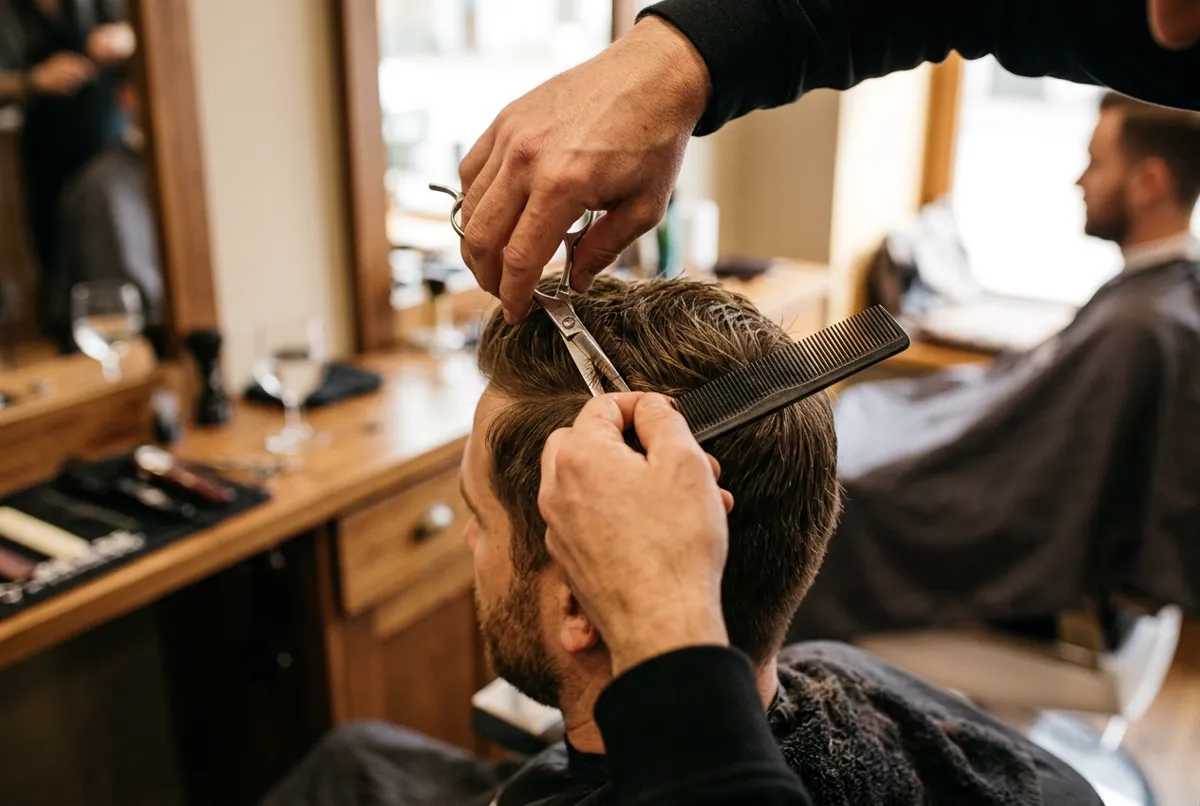
Scissors (also called shears) cut the hair one small section at a time. The barber lifts a section of hair with a comb or with their fingers, holds it at a chosen angle and cuts it to length. Because every section is handled by hand, the barber has full control over texture, layers, weight and movement. Shears can remove a little length or a lot, and they can leave the ends soft instead of blunt.
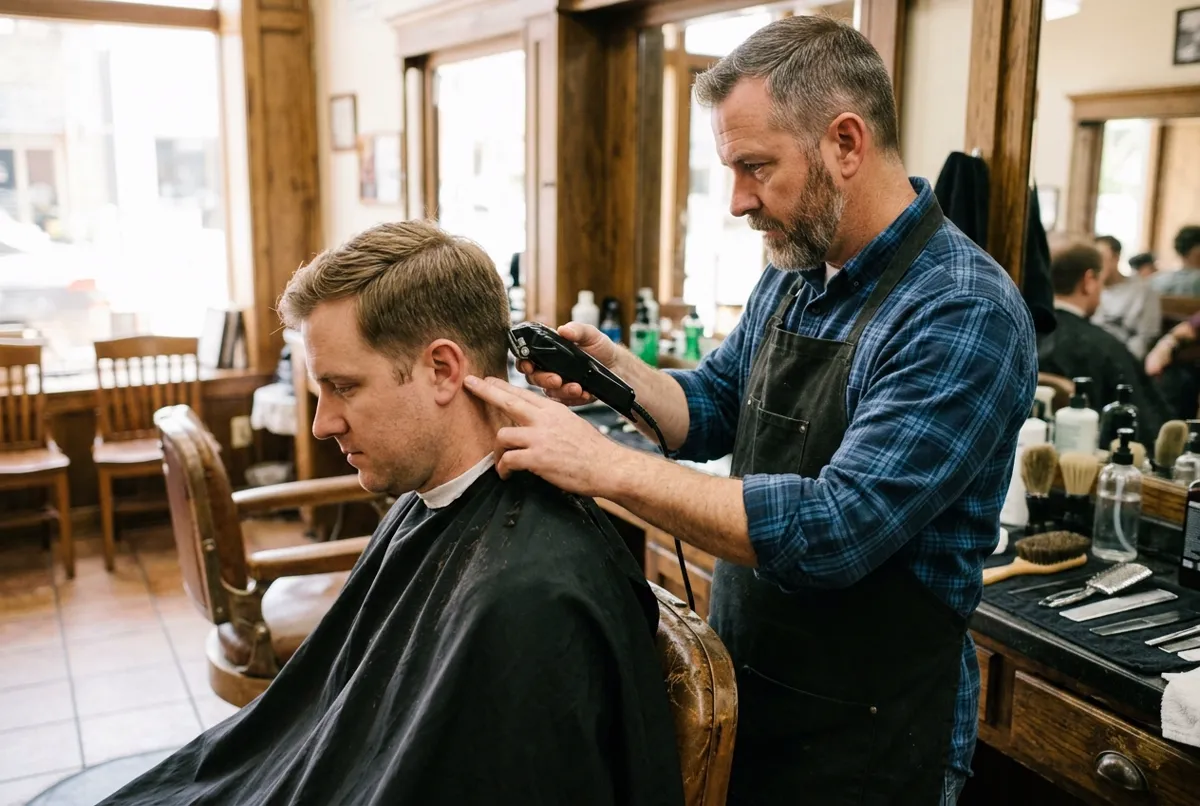
Clippers use a fast-moving blade and are usually fitted with plastic or metal guards in different lengths. The guard sits between the blade and your head, so the hair is cut to the same length wherever the guard touches. Without a guard, clippers can cut very close to the skin. This is why clippers are so good at short, clean styles, even lengths and sharp lines.
A third tool, the trimmer, is a smaller and finer version of the clipper. Barbers use it for detail work, such as the line around the ears, the back of the neck and the sideburns. It is not a replacement for either shears or clippers, but it is part of almost every modern haircut.
The main differences at a glance
| Feature | Scissors (shears) | Clippers |
|---|---|---|
| How the hair is cut | One section at a time, by hand | Fast blade, often with a guard |
| Best hair length | Medium to long | Short to very short |
| Finish | Soft, natural, textured | Clean, even, precise |
| Typical styles | Layered cuts, longer tops, classic cuts | Buzz cuts, crew cuts, fades, tapers |
| Speed | Slower, more detailed | Usually faster for even lengths |
| Skill focus | Angles, sectioning and control | Blending, guard changes and smooth transitions |
When a scissor cut is the best choice
Shears are the right tool whenever the shape of the hair matters more than the exact length. Here are the situations where a scissor cut usually gives the best result.
- Medium to long hair. Shears let the barber shape length and layers without leaving blunt lines. If you want to keep length but remove split ends and tidy the outline, scissors are the natural choice.
- Natural texture and movement. Cutting with shears, including shear-over-comb work, softens the hair so it falls naturally. The ends are not all cut at the same hard angle, so the hair moves better.
- Wavy or thick hair. A skilled barber can remove weight and shape the hair so it sits well instead of puffing out at the sides. Thick hair often needs this kind of careful thinning and layering.
- A softer look. Scissor work gives a more natural finish than a uniform clipper cut, especially around the front hairline and the top.
- Growing hair out. If you are growing your hair longer, regular scissor trims keep the shape under control while you gain length.
What happens during a scissor cut
A scissor cut is slower and more hands-on. The barber usually starts by checking how your hair falls, where it parts naturally and where you have cowlicks or double crowns. Then the hair is sectioned and cut in stages. The barber cuts a guide length first and follows it through the rest of the head. Near the end, the barber may use point cutting or texturizing to soften the lines.
Because the work is so detailed, a scissor cut is a good time to talk. Tell your barber how you usually style your hair, what bothers you about your current cut, and what you want to change. Small details, like how you part your hair or whether you push it back, change how the barber will cut it.
When clippers are the better tool
Clippers are not a lazy shortcut. In skilled hands they can make some of the cleanest and most precise cuts in the barber trade. They are the better tool in these cases:
- Short, tidy styles. Buzz cuts, crew cuts and military cuts are made with clippers. Using shears for a style this short would take far longer and would not give the same even finish.
- Fades and tapers. Blending the sides from skin to longer hair needs the control of clippers and a steady hand. See our guide to zero fade vs. taper fade to understand the difference between the two.
- Sharp edges. Clippers and trimmers are used to make clean neck and sideburn lines, and to outline the hairline.
- Speed. A clipper cut is usually faster when you want a simple, even length.
- Very low maintenance. If you want to spend almost no time styling, a short clipper cut is the easiest option.
Guards, blades and why they matter
The length of a clipper cut is controlled by the guard number. A low guard number leaves the hair very short, and a higher number leaves it longer. Barbers also change the lever on the clipper blade and use different blade types to go closer to the skin. A fade is built by moving through several lengths in small steps, then blending between them so the hair appears to change from skin to length with no visible line.
This is the part that takes real practice. Anyone can run a clipper over a head, but blending the sides evenly, keeping both sides matched and leaving a clean line at the top takes experience and a good eye.
Why most great haircuts use both
The best barbers do not choose one tool over the other. A typical modern haircut uses clippers on the sides and back for a clean fade, then shears on top for texture and shape. Techniques such as shear-over-comb and clipper-over-comb let a barber blend the two areas so there is no visible line between them.
Think of it as using the right tool for each part of the head:
- Sides and back: clippers for a neat fade or taper.
- Top: shears to leave length, texture and shape.
- Neckline, ears and sideburns: trimmers for a crisp outline.
- Transition zone: shear-over-comb or clipper-over-comb to blend the sides into the top.
Shear-over-comb and clipper-over-comb
In shear-over-comb, the barber lifts the hair with a comb and cuts the hair that sticks out through the teeth with shears. In clipper-over-comb, the same idea is used with clippers. Both methods let the barber cut hair at a gradual angle, so the length changes smoothly instead of in steps. Many classic short back and sides haircuts, as well as many modern tapers, rely on one or both of these techniques.
How hair type affects the choice
The same cut can look quite different on different hair, so it helps to think about your own hair before you decide.
Straight hair
Straight hair shows every line, so a precise cut matters. Clippers give very clean results on short straight hair. If you keep it longer, shears help prevent a flat, heavy look by adding light layers on top.
Wavy and curly hair
Wavy and curly hair has natural movement that shears can work with. A barber can shape the hair so the curls sit evenly and do not stack up in one area. Clippers work well on the sides for a clean fade, while the top stays longer and is shaped by hand.
Thick hair
Thick hair can feel heavy and hard to style. Shears can remove weight and add shape. A short fade on the sides also reduces bulk, so the top looks more balanced.
Fine or thinning hair
Fine hair often looks best when it is kept fairly short and neat. A short clipper cut or a tapered cut with a short top can make the hair look fuller and tidier. Long, heavy lengths can make thin areas more noticeable, so ask your barber for honest advice about what suits you.
Which one should you choose?
| Your goal | Best option |
|---|---|
| Short, sharp and low maintenance | Clipper cut or buzz cut |
| Clean fade with length on top | Clippers on the sides, shears on top |
| Longer, natural, textured hair | Scissor cut |
| Classic gentleman’s cut | Shears on top, tapered sides |
| Growing your hair out | Scissor trims to keep shape |
| Thick, heavy hair | Shears for weight removal, short sides |
If you are not sure, tell your barber how much time you want to spend styling each morning and how often you plan to come back. They will recommend the right mix for your hair type and head shape.
How to ask for the cut you want
Many people find it hard to describe a haircut. These simple steps make the conversation easier.
- Bring a photo. A picture of the style you like removes most of the guesswork. A photo of a style you do not like can help too.
- Describe the sides and the top separately. For example, “short fade on the sides, longer on top with some texture.”
- Say how you style it. Tell your barber if you use product, if you comb it, or if you just wash and go.
- Mention your daily routine. If you wear a helmet, a hard hat or a cap for work, the barber can pick a cut that handles it well.
- Speak up during the cut. If you want it shorter or longer, say so before the barber finishes that section.
How often should you get a trim?
Short clipper styles and fades look best when refreshed every 2 to 3 weeks. Longer scissor cuts usually hold their shape for 4 to 6 weeks. Your hair growth rate and style will change this, so use these times as a starting point.
Fades show growth faster because the contrast between skin and hair is so clear. A longer, layered cut hides growth better, because there is no sharp line to lose. If you like the look of a crisp fade but do not want to visit often, ask for a taper instead, which grows out more gently.
Simple tips to keep your cut looking good at home
- Wash with a suitable shampoo. Choose one that matches your scalp and hair type, and avoid washing too hard.
- Use a little product. A small amount of clay, paste or cream is usually enough. Too much weighs hair down.
- Brush or comb in the direction of the cut. This helps the hair fall the way your barber shaped it.
- Do not trim the sides yourself. Home clipper work can leave uneven lines that are hard for a barber to fix without cutting shorter.
- Look after your skin. A short cut shows more of your scalp and neckline. Our skincare products can help keep your skin comfortable.
If you also wear a beard, a good haircut and a tidy beard work together. Read our tips on beard maintenance to keep both looking balanced. For a very clean finish around the neckline and cheeks, you might also like a straight razor shave.
Scissor and clipper cuts at Albakir Barbershop
At our Oakville barbershop, our barbers have more than 15 years of experience with both tools. You can choose the cut that suits you:
- Scissor Cut ($35): an all-scissor cut for medium to long hair with soft texturing and layering.
- Buzz Cut ($30): a uniform clipper cut with sharp edging.
- Haircut ($35): a custom cut with clipper and shear detailing, tailored to your head and face shape.
We also offer fades and tapers, so you can pair clean sides with a longer, shaped top. If you want a more complete grooming experience, take a look at our VIP services and our VIP package. You can learn more about our team on the about us page.
See all of our barber services and prices, or contact us with any questions.
Frequently asked questions
Is a scissor cut better than a clipper cut?
Neither is better in every case. A scissor cut is better for medium to long hair and for a soft, natural finish. A clipper cut is better for short styles, fades and sharp lines. Most haircuts use both tools.
Can you do a fade with scissors only?
A true skin fade needs clippers. A skilled barber can use shear-over-comb to create a soft taper on the sides, but it is slower and gives a different look from a clipper fade. If you want a clean fade, clippers are the usual choice.
Do clippers damage hair?
Clippers do not damage hair when they are clean, sharp and used properly. A dull or dirty blade can pull the hair, which feels uncomfortable. Professional barbers keep their tools clean and in good condition for this reason.
Which cut lasts longer between visits?
A longer scissor cut usually grows out more gracefully and holds its shape longer than a short fade. Fades look best with a refresh every 2 to 3 weeks, while longer cuts often last 4 to 6 weeks. Your own hair growth will change these times.
What should I ask for if I have thick hair?
Ask for a cut that removes weight and keeps the shape balanced. This often means shorter sides done with clippers and a top shaped with shears. Your barber can recommend the right amount of length for your hair.
Is a buzz cut the same as a fade?
No. A buzz cut uses the same length all over the head, usually with a single guard. A fade changes gradually from very short or skin at the bottom to longer hair higher up. Both are done with clippers, but a fade takes more blending work.
Do I need an appointment, or can I walk in?
Walk-ins are welcome at Albakir Barbershop. If you prefer to plan ahead, you can also book online or call us.
How much does a haircut cost at Albakir Barbershop?
A Haircut, Scissor Cut, Zero Fade or Taper Fade is $35, and a Buzz Cut is $30. You can see the full list on our services page.
Ready for your next cut?
Whether you want a soft scissor cut, a sharp clipper fade or a mix of both, our team is ready to help you pick the right style. We are open Monday to Friday from 10 am to 8 pm, Saturday from 10 am to 6 pm and Sunday from 10 am to 5 pm. Walk-ins are welcome at 560 Kerr St, Oakville, ON L6K 3C7, or you can book online or call (905) 844-0555.
One Response